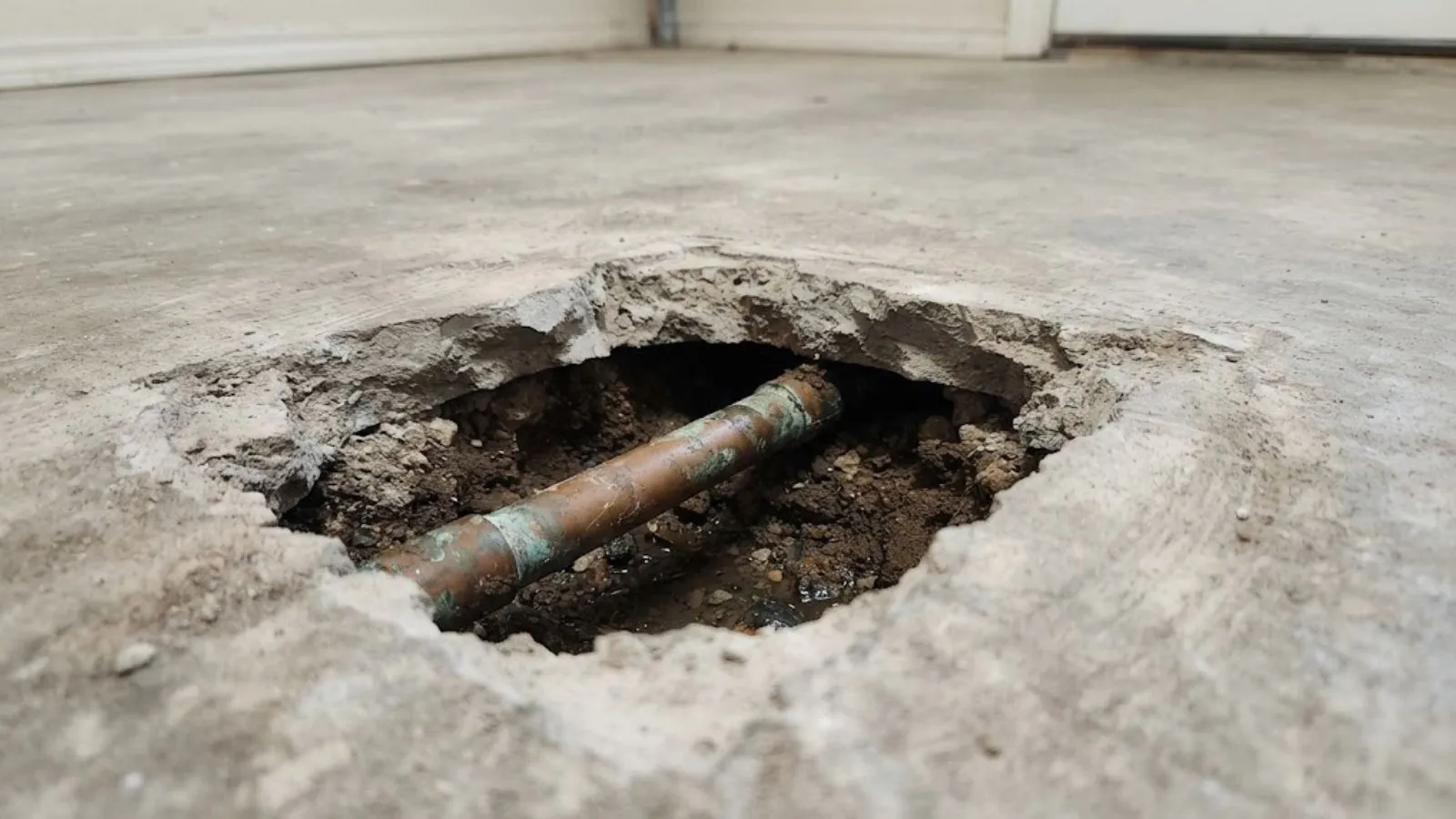
How a hot line differs from a cold one
A hot water line leaks into the soil under the slab and warms the concrete above it. Copper in this position is attacked from the outside by soil and moisture and from the inside by heat, which is why hot lines often fail before cold ones.
A cold line leak raises bills and softens flooring but rarely warms the floor. A warm spot is the clearest clue that a hot line is the source.
Clues to look for
One sign alone may have another cause, but two or three together make a slab leak likely.
- A floor area that feels warm barefoot
- A water heater that runs all the time or never gets fully hot
- A sudden jump in the water bill
- The sound of running water when all fixtures are off
- Low hot water pressure at the farthest faucets
- Damp carpet, lifting tile or a musty smell near one spot
A sound like running water at night is easy to hear in a quiet house. Listen with your ear near the floor before bed.
Warm floor and a spinning meter? Call and we will locate the leak.
Call (855) 575-2890Confirm it before you call
Turn off every fixture and appliance that uses water. Look at the meter dial or the small triangle on it. If it moves, water is going somewhere. Then shut the water heater inlet valve and recheck. If the meter slows or stops, the leak is on the hot side.
Do the same with the main valve closed. If a spinning meter does not change when you close the heater inlet, the cold side is leaking instead.
How the leak gets located
Acoustic listening picks up the hiss of escaping water through the concrete. A pressure test isolates a line and shows whether it holds. Thermal imaging can map the warm path of hot water under a floor. Together these tools narrow the leak to a patch of slab a few feet across.
No single tool is perfect. Concrete thickness, pipe depth and background noise all affect results, and we say so when readings are uncertain.
Repair routes for a hot water slab leak
The right route depends on pipe age, the number of leaks and how much of the house you can disturb.
| Route | How it works | Trade-off |
|---|---|---|
| Spot repair through the slab | Cut the floor, replace the bad pipe section | Direct, but floor finish must be repaired |
| Reroute through walls or attic | Abandon the slab line, run new pipe overhead | Less floor damage, more wall work |
| Epoxy lining | Coat the inside of old pipe | Not suited to every pipe or a clear break |
| Repipe the house | Replace all supply lines | Best when several leaks or old pipe are present |
A second leak on a line often follows the first, so ask about the rest of the loop.
Safety while you wait
Hot water under pressure can scald, so do not touch a leak coming through a crack. Shut off the water heater and, if the heater is electric, its breaker. Keep electrical items and cords off a wet floor and photograph any damage for your insurer.
Questions to ask before you approve a repair
Ask what tools were used to locate the leak and how sure the plumber is of the spot. Ask whether the line is copper, CPVC or polybutylene, how old it is and whether other lines nearby show wear. Ask how the floor will be patched and how long the concrete must cure.
A plumber should explain the price before work starts and tell you what is not included, such as flooring, paint and cabinets. Verify the contractor at MyFloridaLicense.com by typing the name into the Verify a License tool.
Why waiting makes it worse
Water under a slab can wash away soil, leaving a void that lets the floor settle. It also feeds mold in wall cavities and can damage flooring and baseboards that are far from the break. Hot water adds a constant utility cost, since the heater keeps heating water that leaks away. Even a small hot leak can add up on the monthly bill.
A small leak that is easy to reroute today can become a floor-wide repair if it continues for months. Early action keeps the repair small and the disruption short.
Tavares local note: the meter and the age of the house
The City of Tavares Utilities maintains about 134 miles of water lines, and your meter is the dividing line between city pipe and yours. A meter that runs with everything off, as described above, is a leak inside your property line.
Homes built from the late 1970s into the mid 1990s in this area may have polybutylene supply piping, which fails differently from copper and often points toward repiping. Ask about the pipe type before choosing a spot repair, and ask the City of Tavares Building Division about permit rules.
Who to call and what to ask
Our slab leak repair crews start with detection, and our leak detection visit can confirm the source without cutting anything. We explain the price before work starts and show you what the instruments found.
If you are in Mount Dora or Leesburg, the same checks apply: a warm patch, a moving meter and a bill that does not make sense.
Frequently asked questions
Shut the water heater inlet valve and watch the meter. If the meter slows or stops, the leak is on the hot side. A warm patch on the floor also points to a hot line, and a cold leak will not warm the concrete.
It does not usually damage the heater, but the heater works harder to replace lost hot water and may run constantly. A heater that never catches up is a symptom, not the cause.
No. Sunlight through a window or a floor over a hot appliance can warm a spot. If the spot is small, stays warm at night and the meter moves with fixtures off, it is likely a leak.
It depends on the policy and on whether the damage was sudden. Many policies cover resulting water damage differently from the pipe repair itself. Document everything with photos and call your insurer early.
Detection usually takes a few hours when the system is accessible. Complex layouts and old multiple leaks take longer. The repair is scheduled once the leak is located.
A single leak in newer copper can be spot repaired. Repeated leaks, pinholes or old polybutylene piping point toward repiping. A plumber can show the condition of exposed pipe to help you decide.
A hot line leaking under concrete only gets worse, so call early.
Call (855) 575-2890Sources and standards
Where this page cites a local fact, it comes from a public City of Tavares page, another city's own web page or a published water quality report. Where a figure is not published, the page says so instead of guessing.
Plumbing work in Florida is governed by the Florida Building Code, Plumbing, which is the standard inspectors apply, and permit rules vary by city. The contact page explains how to reach us, and any plumber's license can be checked with the Verify a License tool at MyFloridaLicense.com.