What your drains are telling you
Drains rarely fail without warning. Many blockages give warning signs first, and the pattern shows how far down the line the trouble sits.
- One sink drains slowly and the rest of the house is fine: the clog is in that fixture's own trap or branch
- Gurgling from a tub or shower when the washer drains or a toilet flushes: air is being pushed past a restriction in a shared line
- A toilet and a tub both back up, or the tub fills when you flush: the main drain is probably blocked
- Water or sewage bubbling from a floor drain or the lowest shower: the main line is blocked or full
- A drain that clears for a few days and slows again: grease, scale or roots are narrowing the pipe
- A sewer smell in the yard or garage with no fixture backing up: a cracked or sagging section of pipe
A single slow drain is a daytime job. Two or more fixtures acting up together, or any water coming out of a floor drain, is the moment to call right away, because a blocked main line sends wastewater to the lowest fixture in the house.
Backed up right now: what to do first
Four steps keep a bad backup from getting worse. They cost nothing and take only a few minutes.
Pause the washing machine and dishwasher, and hold off on showers and flushing. Every gallon you send down has nowhere to go but out of the lowest fixture.
Caustic openers can sit in a full pipe for hours. They splash on whoever opens the line next, and they do not cut through grease balls or tree roots.
Lay towels at the base of the tub or floor drain and move rugs and boxes away. Wastewater carries bacteria, so wear gloves and wash your hands afterward.
Many homes have a capped pipe about 4 inches wide near the house wall or at the edge of the yard. Do not open it while the line is full, but tell the dispatcher where it is.
If sewage is coming up inside, keep children, pets and anyone with a weak immune system out of the room until it is cleaned. Photograph the water line on walls and floors before cleanup, since an insurer will want to see it.
Water rising in a tub or floor drain? Stop using the house and call now.
Call (855) 575-2890Your pipe, the city's sewer, and the lift stations between
The drains in a house feed one private pipe that runs to the City's sewer or, on some properties, to a septic tank. The City of Tavares Wastewater Division says it monitors 70 lift stations around the clock and treats the flow at its Woodlea Road water reclamation facility. Those pumps and mains belong to the City, so a clog inside your lot is a plumber's job and a problem in the street main is a call to the City.
How to tell which side the clog is on
Start with the neighbors. If several homes on the street have slow drains or sewage coming up, the trouble may be in the public main, and the City lists an emergency sewer line on its Wastewater Division page. If only your house is affected, the blockage is almost always in your own line.
Ownership points can differ from lot to lot, so ask the City of Tavares where your responsibility ends. A camera run, explained on our sewer inspection page, shows whether the clog sits before or after the property line.
Why a wet week makes clogs worse
Tavares sits on a strip of land between Lake Eustis and Lake Dora, and the ground stays wet after storms. Roots follow that moisture to loose joints in older clay and cast iron laterals, so a line that was marginal in a dry month can stop in a wet one.
Kitchen sink clogs are a different problem
Kitchen drains clog differently from bathroom drains. Cooking grease cools inside the pipe and coats the wall, and then rice, coffee grounds and eggshell bits catch on the coating until a plug forms. A double bowl that drains a little slower each week is usually heading that way.
We begin by pulling the P-trap, because a fistful of buildup there is the most common cause. If the trap is clear, a cable goes into the wall line toward the main. When a disposal is in the way, the unit may have to come off, and our garbage disposal repair page explains what a jam or a failed unit looks like.
A kitchen line that clogs again within weeks has grease built up deeper than a cable can scrape. That is when hydro jetting makes sense, since water at high pressure strips the coating off the pipe wall instead of punching a small hole through it.
Cable, jet or camera: which method fits
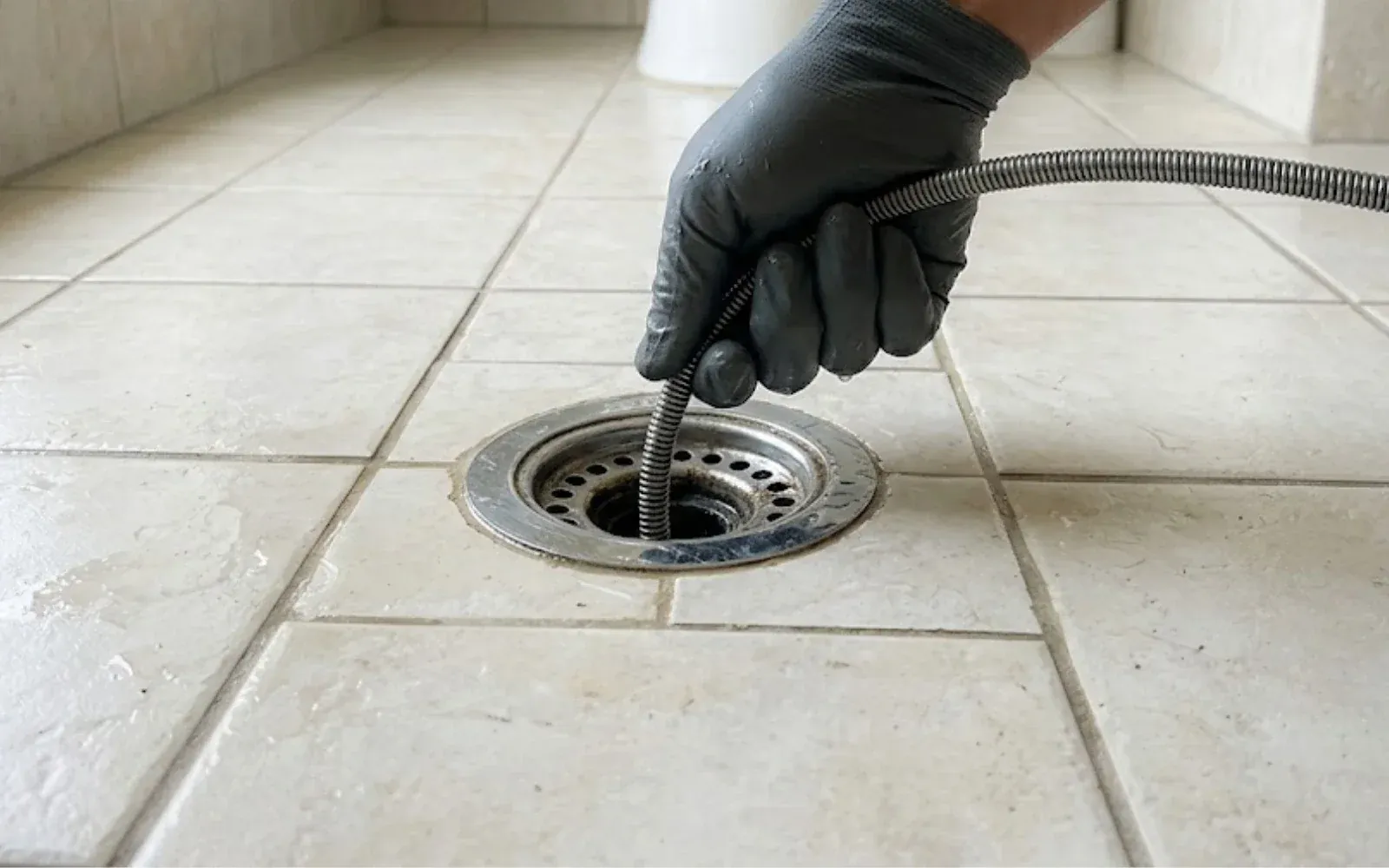
Drain snaking, also called cabling, pushes a rotating steel cable through the pipe to break up or hook a clog. Jetting sends high-pressure water through a hose to wash the whole pipe wall. Neither is best for every case.
| What you see | Method we use | Why it fits |
|---|---|---|
| One sink or tub, slow or stopped | Hand or drum cable through the trap | Reaches a nearby clog quickly and keeps the cost down |
| Toilet and tub both backing up | Larger cable at the main cleanout | Passes the branch lines and reaches the shared drain |
| Same drain clogs every few weeks | Camera, then hydro jetting | Shows whether it is grease, scale or roots before choosing |
| Roots in a clay or cast iron lateral | Cutting head on a cable, then jetting | Cuts the roots back now, though they regrow unless the pipe is repaired |
| Cable keeps stopping at something solid | Camera inspection | A sagging or broken pipe cannot be cleaned into working order |
The method is chosen once the plumber sees what comes back on the cable. This table is a guide, not a quote.
What happens during a drain cleaning visit
- 01Find the blockage
The plumber asks which fixtures are affected, runs water to see where it backs up, and picks a cleanout or fixture opening.
- 02Clear the line
A cable, cutting head or jet goes in until water moves freely. What comes back on the cable, whether grease, hair, roots or scale, points to the cause.
- 03Test the flow
Water runs through every fixture on that line for several minutes, not just a few seconds, to confirm the drain holds.
- 04Explain the result
If the line shows cracks, roots or a low spot, we say so and offer a camera inspection. If it was a one-time clog, we tell you that as well.
What affects the price of drain cleaning
Price follows the work, not the word clog. Five things move it most, and the plumber explains the number before starting.
A bathroom sink trap is a small job. A main line with a cleanout 40 feet from the house takes more time and larger equipment.
Soap and hair clear fast. Packed grease, roots or a toy stuck in a bend takes more passes.
A cable is the lowest-cost tool. Jetting and a camera add equipment time but find and fix more.
A reachable cleanout makes the job simple. If the line must be opened by pulling a toilet or going through a roof vent, it takes longer.
Nights, weekends and holidays can change the dispatch cost, and we tell you before work starts.
Homeowners insurance generally does not pay to clear a clog from ordinary buildup. It may cover water damage from a sudden sewage backup, but many policies need a separate endorsement for that. Ask your carrier before you file and photograph the damage first.
Want your real number? Describe the job to a dispatcher and the price is explained before work starts.
When a drain leaks, cleaning will not fix it
A cleaned drain that still leaks is a different problem. A cracked or loose drain pipe leaks only when water runs through it. A stain on the ceiling under a tub, a damp spot in the garage after laundry day, or a wet patch under a bathroom points to a drain line and not a supply line.
Cutting out and replacing a failed section is the usual repair, and a leak detection visit can confirm the spot before anything is opened. If the camera shows a long cracked run, the sewer line repair page covers spot repair, lining and replacement.
We take drain calls at night, on weekends and on holidays. Same-day appointments are offered when available for problems that can wait until morning, and anything with water coming out of a fixture is treated as urgent. Describe what you see and the dispatcher will tell you which kind yours is.
Drain cleaning across Tavares and nearby towns
Tavares drains range from newer homes to older streets and downtown buildings. Pipe age changes what a cable pulls back, so we ask when the house was built on the first call.
In Eustis, Victorian homes and early 20th-century buildings downtown can still carry old cast iron drains, which roughen inside and catch debris. We also dispatch to Mount Dora and the other nearby Lake County towns.
Frequently asked questions
Yes. The line is open 24 hours a day, every day of the year. Tell the dispatcher which fixtures are backing up and whether water is coming out of a floor drain, and a licensed plumber is scheduled as quickly as the day allows.
Run the fixtures one at a time. If only one sink is slow, the problem is local to that fixture. If a toilet, tub and floor drain all act up together, or the tub gurgles when the washer drains, the shared main line is the likely culprit.
We advise against it. The liquid sits in the pipe and can splash on the plumber or on you. It also does little to grease and roots. A cable or jet removes the blockage instead of dissolving a small part of it.
Gurgling means air is pushing past a partial blockage or a poorly vented line. If it happens with more than one fixture, the main drain is probably narrowing. It is a good time to clean the line, before it stops completely.
A properly sized cable in a sound pipe does not harm it. Old cast iron or a cracked clay line is more fragile, which is why we may run a camera before pushing hard. If the pipe is already damaged, cleaning only buys time.
If only your house is affected, call us, since the blockage is almost certainly in your own line. If neighbors have the same problem, call the City of Tavares Wastewater Division as well, because the public main may be involved.
A cable opens a hole through grease but leaves the coating on the pipe wall, and the opening narrows again. Hydro jetting washes the wall clean. See our hydro jetting page for how that works and when it is worth doing.
A clogged line gets worse with every flush, so call the number that answers at any hour.
Call (855) 575-2890Sources and standards
Where this page cites a local fact, it comes from a public City of Tavares page, another city's own web page or a published water quality report. Where a figure is not published, the page says so instead of guessing.
Plumbing work in Florida is governed by the Florida Building Code, Plumbing, which is the standard inspectors apply, and permit rules vary by city. The contact page explains how to reach us, and any plumber's license can be checked with the Verify a License tool at MyFloridaLicense.com.