New installs, relocations and fuel switches
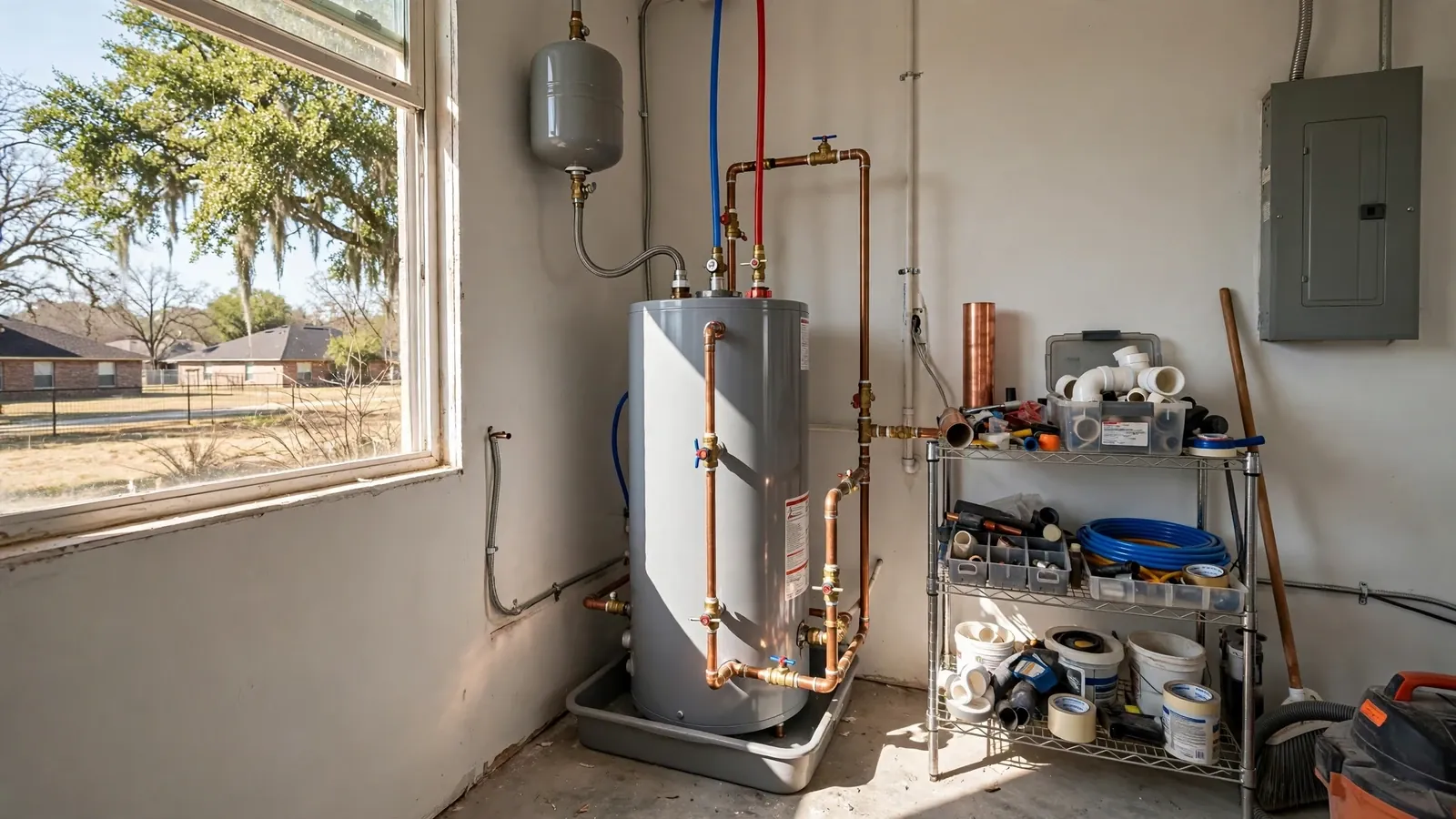
A new install starts with the place the heater will live. The best spot is close to the busiest fixtures, because every foot of pipe between the tank and the tap holds cold water that you wait to push out. It also needs a floor drain or a pan with a drain line, room to service the unit and clear access for a future replacement.
Think about future service too. A heater with a clear front, a floor that can take a wet vacuum and a doorway wide enough for a replacement tank will be cheaper to maintain for its whole life.
A relocation often means new hot and cold lines, a new drain path and a new vent or electrical run. A fuel switch, such as electric to gas, adds a gas line or a vent. Our plumbing installation page covers the wider remodel work that these jobs often sit inside.
Reclaimed water is for the lawn, not the water heater
The City of Tavares provides reclaimed water for irrigation, and the City runs a cross-connection program through its Water Division. The two lines must never meet, so a house fed only by potable water gets its heater from the potable line alone. In a lot where an irrigation line runs near the house, we confirm which line is which before we cut into any pipe.
If you are not sure whether your lot has a reclaimed line, ask the City of Tavares Utilities. Pipe color and labels can be clues, but they are not proof, and an unlabeled line is worth a question before any work starts. A wrong guess here is a health issue, not a cosmetic one.
Planning a new or relocated heater? Call and describe the space.
Call (855) 575-2890Gas, electric or heat pump for the new location
The fuel decision drives the rest of the job. Here is how the three common options compare at the install stage.
| Option | What it needs at the site | Watch for |
|---|---|---|
| Electric tank | A dedicated circuit, a drain pan and water lines | Panel capacity, wire size and breaker space |
| Gas tank | A gas supply, a vent to the outside and combustion air | Vent route, gas line size and clearances |
| Heat pump (hybrid) tank | A 240-volt circuit, a condensate drain and open air around the unit | Noise, cool exhaust air and a tight closet |
| Tankless, gas or electric | Larger gas line or heavy electrical service, plus venting | Detailed on our tankless page |
If you want gas and the house has none, tell us at the first call. A new gas line is a separate scope of work, and we will explain who handles it.
Parts that belong on every install
A heater is only as safe as the fittings around it. These parts are on the job whenever the location calls for them.
- A shutoff valve on the cold inlet, so the heater can be isolated for service
- A temperature and pressure relief valve with a discharge pipe routed to a safe place
- A drain pan with a pipe to the outside or a floor drain where a leak would damage finished space
- An expansion tank where the plumber finds the supply to be a closed system
- Flexible or rigid connectors, sized and rated for hot water
- A drain valve at the bottom of the tank for future flushing
- Clear labeling of the hot and cold lines and a note of the date on the tank
Which of these apply depends on the site. The plumber walks the location with you and lists what the job needs.
Venting, gas lines and electrical service
Gas heaters need a vent that carries exhaust outside and a supply of air to burn. A vent that is too long, too flat or poorly sealed can let exhaust back into the house. We check the route, and we tell you when a location is not suitable for a gas unit.
Fuel supply
A gas heater needs a supply line of the right size and a shutoff within reach. If new gas piping is required, say so on the call so the proper licensed person is arranged. Electric units need a circuit sized for the heater, and the panel must have space and capacity.
Tankless units
A tankless heater asks for much more from the gas line or the panel than a tank does, and it needs its own vent materials. Sizing and scale care are covered on our tankless water heater page. We bring the same site checks to a tankless install as to any other.
Heat pump models
A hybrid heat pump heater pulls heat from the surrounding air and cools that air as it works. It needs room around the unit and a place for condensate to drain. Garages suit it well. A sealed closet does not.
Get the space ready before install day
A little preparation shortens the job. These four tasks help most.
Move boxes and tools from the garage or closet and from the route between the door and the heater location.
Find the main water valve and, for gas, the meter shutoff. Tell the plumber if any valve is stuck.
For an electric or heat pump unit, note whether the panel has a free double breaker space. Photos help us plan.
If an existing heater is coming out, say whether you want it hauled away or left for another contractor. When the old unit has failed and needs to come out, the water heater replacement page explains the swap itself.
Codes and permits
The Florida Building Code, Plumbing is the governing code for plumbing work in Florida. The UPC and IPC are model codes that other states adopt, and neither is the Florida rule. We do not quote sections from memory, because the right answer is the one the local building department enforces.
Permit rules vary, so ask the City of Tavares Building Division at 201 E. Main Street before the install date. In Leesburg or other nearby towns, the local building department sets the process, and our Leesburg plumbing page lists the area we cover.
What an installation costs and why it varies
Two installs of the same heater can differ widely in cost because of the site. The plumber looks at the space and explains the price before work starts.
Tank, hybrid and tankless units cover a wide price range before any labor.
A heater next to the old one needs short connections. A new spot may need new piping, patching and a drain route.
A new vent, a gas line or a new circuit adds materials and labor, and sometimes another trade.
Drain pans, discharge piping, expansion tanks and valves are part of the job, not extras.
Garage floors and open closets are simple. Attics and crawl spaces take more time.
Insurance does not usually pay for a planned installation. If the new heater is part of repairs after a covered loss, your adjuster may include it. Ask before the work and keep the invoice and the product label photo.
Want your real number? Describe the job to a dispatcher and the price is explained before work starts.
Frequently asked questions
A like-for-like tank in an easy spot can take a few hours. A relocation, fuel switch, or tankless install with new venting or a new gas line takes longer and may be split over visits. We give the expected scope once we see the site.
Usually yes. It requires new hot and cold lines, a drain route and sometimes a new vent or circuit. The best spot is near the busiest fixtures and has room to service the unit.
We install electric and heat pump tanks and work on gas tanks, and we install tankless units. If new gas piping is needed, we tell you who will handle that part. Call with your site details and fuel preference.
A pan protects finished space if the tank ever leaks, and it is wise anywhere the water would damage floors, ceilings or walls. Attic and second-floor locations especially. The plumber advises based on the location.
No. Tavares provides reclaimed water for irrigation, not for drinking, bathing or hot water. The heater connects to the potable supply only, and we confirm the line before cutting into any pipe.
Permit rules vary by city and job. The City of Tavares public pages do not state the water heater rule, so ask the Building Division at 201 E. Main Street. We describe the work in plain terms so you know what to ask.
A heater set up right the first time saves repairs later. Call to schedule the install.
Call (855) 575-2890Sources and standards
Where this page cites a local fact, it comes from a public City of Tavares page, another city's own web page or a published water quality report. Where a figure is not published, the page says so instead of guessing.
Plumbing work in Florida is governed by the Florida Building Code, Plumbing, which is the standard inspectors apply, and permit rules vary by city. The contact page explains how to reach us, and any plumber's license can be checked with the Verify a License tool at MyFloridaLicense.com.