What to do first when you suspect a slab leak
Four steps cost nothing and limit the damage while a plumber is on the way.
Turn the main shutoff clockwise at the front of the house or at the meter box. If the meter then stops, the leak is on the house side.
Record the reading before and after you close the valve. It tells the plumber how fast water is escaping.
Lift rugs and furniture off wet or warm areas, and switch off breakers for any room with standing water.
Take pictures of wet flooring, baseboards and the meter for your insurance claim before anything is dried.
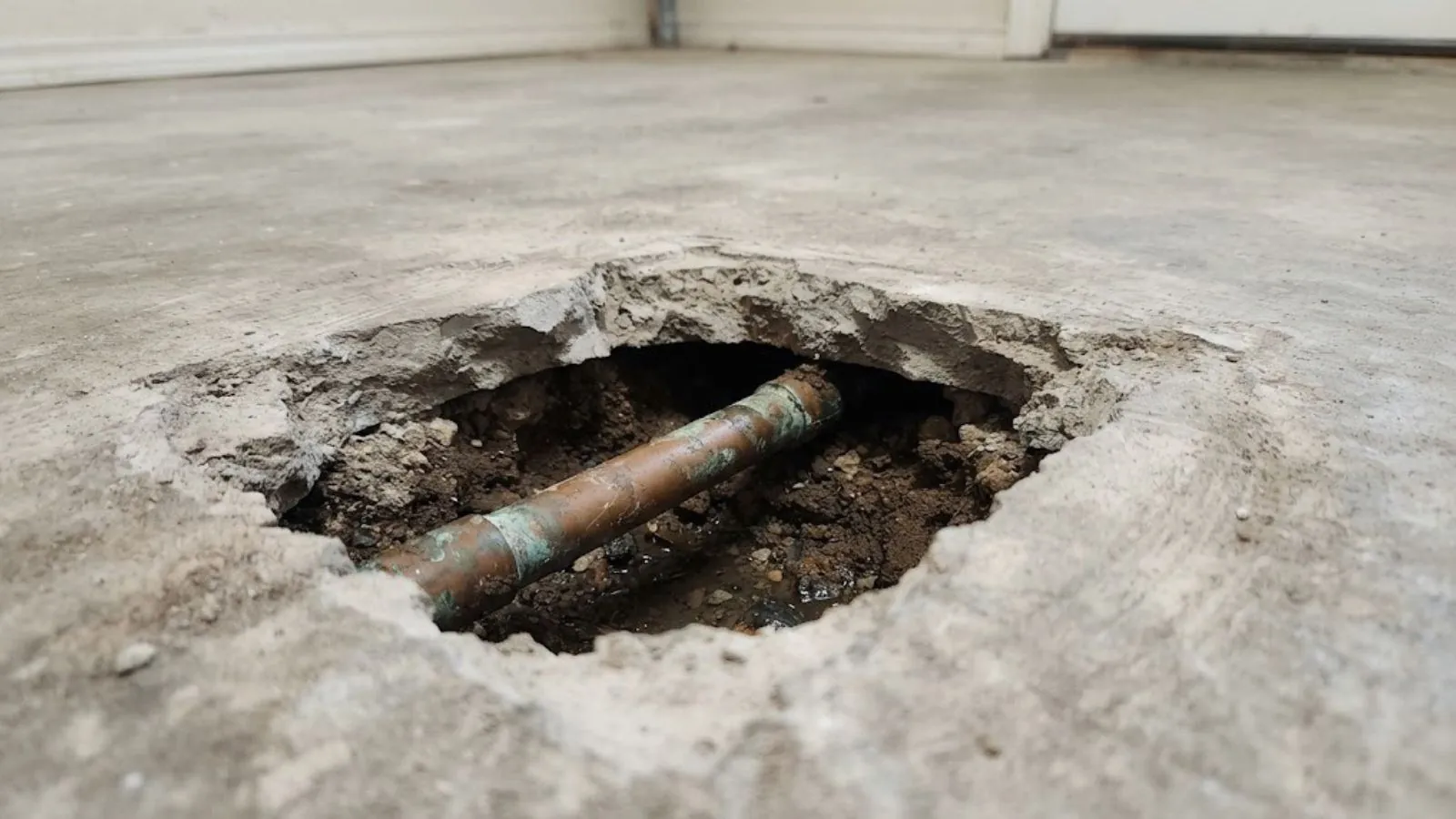
Do not drill or chip the slab yourself. Post-tension cables or rebar can be under the surface, and a nick can turn a plumbing repair into a structural one.
How a slab leak shows itself
Hot water lines under the floor tend to give the earliest warning. A section of floor that is warm to bare feet when the heater is off often sits above a leaking hot line. A cold line leaks just as hard but reveals itself later, usually as damp carpet along a wall or a musty smell from under the tile.
Sound and numbers help as well. A faint hiss or rushing noise in a quiet house, weak hot water, and a bill that rises with no change in habits all fit a pressurized leak. Baseboards that swell, grout lines that darken and tile that lifts at the edges are signs the moisture has been there for a while.
Floor warm and meter spinning? Call now, a dispatcher is on the line.
Call (855) 575-2890Why slab lines fail around the lakes
Tavares sits on a narrow strip between Lake Eustis and Lake Dora at roughly 118 feet above sea level. Near the shoreline the water table can stand high for long stretches, so the soil around a slab stays damp and quietly attacks copper from the outside. Pinholes form where pipe touches concrete or sand that holds moisture.
Age and pressure add to it. Copper that has been rubbing against the slab through years of expansion and contraction wears through at bends. Homes with polybutylene supply lines from the late 1970s to the mid 1990s can fail at fittings, and a pressure regulator that has drifted high speeds up every one of these problems.
Repair options for a leak under the slab
| Option | Best when | Trade-offs |
|---|---|---|
| Spot repair through the slab | One leak, accessible location, floor can be opened | Cutting and patching concrete and flooring, and other weak spots stay |
| Reroute overhead | Under-slab line is failing in several places | New pipe runs through the attic or walls, so ceilings and walls may need patching |
| Full repipe | Old, worn or polybutylene pipe throughout | Largest job, but ends the pattern of new leaks |
| Epoxy lining of a pipe | Sometimes considered for small pinholes | Not suited to every pipe, and local fit varies, so we explain it case by case |
These are general descriptions, not quotes. The pipe, the floor finish and the number of leaks decide what really makes sense.
Spot repair, reroute or repipe: how we help you choose
The first leak is not the whole story. A pressure test after the repair shows whether the rest of the system holds, and if it does not, a single patch only buys time. We lay out each choice with the disruption it brings, so the decision is yours.
When a spot repair is enough
If one pinhole is the only failure and the line is otherwise sound, opening the slab at that point is the fastest fix. The plumber scans for rebar and cables, cuts a small opening, replaces the damaged piece and pressure tests before the concrete is patched. Flooring over the cut is replaced by a flooring contractor, not by us.
When rerouting makes more sense
A reroute abandons the leaking under-slab line and brings new PEX or copper through the attic to the fixtures. It avoids cutting the floor at every leak. The trade-off is access, since walls and ceilings need openings and patching, and it is usually done for a leak that has repeated or a line that is in poor shape.
When a repipe is worth discussing
If the pipe is the type that is known to fail, or leaks keep appearing, see our repiping service for how a whole-house replacement works. It costs more up front and often costs less than a string of separate repairs.
How the leak is located before anything is cut
- 01Confirm it is the slab
We rule out the toilets, fixtures and attic lines first, then close the main valve and watch the meter.
- 02Isolate the zone
A pressure test on hot and cold lines separately tells us which side is losing water, and which part of the house.
- 03Listen and image
Acoustic microphones on the floor and a thermal camera mark the spot, and tracer gas helps when the readings disagree.
- 04Mark and explain
We mark the floor, explain the options and price, and schedule the repair, often the same day when parts and crew are available.
What a slab leak repair costs
Prices vary because no two slabs are alike. These five things move the cost most.
A leak near a wall or in a hallway is quicker to reach than one under a kitchen island or a tiled bath.
Carpet lifts easily. Tile, stone and wood need careful removal and a flooring contractor afterward.
A spot repair, a reroute and a repipe are very different jobs in time and materials.
A second or third leak on the same line often shifts the best option toward replacing the line.
Drying and rebuilding is separate work, and slab homes can hide moisture under flooring for a long time.
Many policies cover resulting water damage and some cover the cost of reaching the leak, but they often exclude the worn pipe itself. Call your carrier before repairs, and keep the plumber's report and your photos.
Want your real number? Describe the job to a dispatcher and the price is explained before work starts.
Worth knowing about mold and your water bill
Moisture under flooring can feed mold within days in Florida's humid air. If a carpet smells musty or a baseboard is soft, ask for a moisture reading as part of the visit. A leak that has run for weeks may also have pushed your water bill far above normal, so keep your meter readings.
Slab leaks in Tavares and the towns around it
Most subdivisions around Tavares, Eustis and Mount Dora were built on slab-on-grade foundations, so under-slab plumbing is the norm here, not the exception. Lots close to the lakes tend to have the dampest soil, and we ask where your home sits when you call.
If you cannot tell whether the hidden water comes from the slab or elsewhere, a broader leak detection visit sorts it out before any concrete is opened.
Frequently asked questions
Yes. The line runs 24/7. If a floor is wet, a hot spot is spreading or the meter is racing, call, shut the main valve and wait for dispatch. We offer same-day appointments when the schedule allows, and a plumber explains the price before work starts.
A warm patch on the floor, a hissing sound with fixtures off and a meter that moves with the main valve open and all taps off point to the slab. Wet carpet along a wall may also point to it. Pressure testing and listening confirm the location.
Sometimes. A spot repair opens the slab at the leak, while a reroute avoids it by running new pipe overhead. We find the leak first so any opening is small and in the right place, and we explain which option fits before work begins.
A long-running leak can wash soil from under a slab or soften the ground around it, which may lead to cracking. Most slab leaks are caught well before that, but a steady wet spot is worth fixing quickly.
Often it covers the water damage and sometimes the cost to reach the pipe, but it usually does not pay for the failed pipe. Check your policy, photograph the damage, and call the carrier before repairs begin.
If one pinhole is the only failure, a spot repair is reasonable. If pipes are old, there are repeated leaks or the line is polybutylene, a reroute or repipe usually saves money over time. We help you compare.
A leak under the slab does not stop on its own, so do not wait for the weekend.
Call (855) 575-2890Sources and standards
Where this page cites a local fact, it comes from a public City of Tavares page, another city's own web page or a published water quality report. Where a figure is not published, the page says so instead of guessing.
Plumbing work in Florida is governed by the Florida Building Code, Plumbing, which is the standard inspectors apply, and permit rules vary by city. The contact page explains how to reach us, and any plumber's license can be checked with the Verify a License tool at MyFloridaLicense.com.