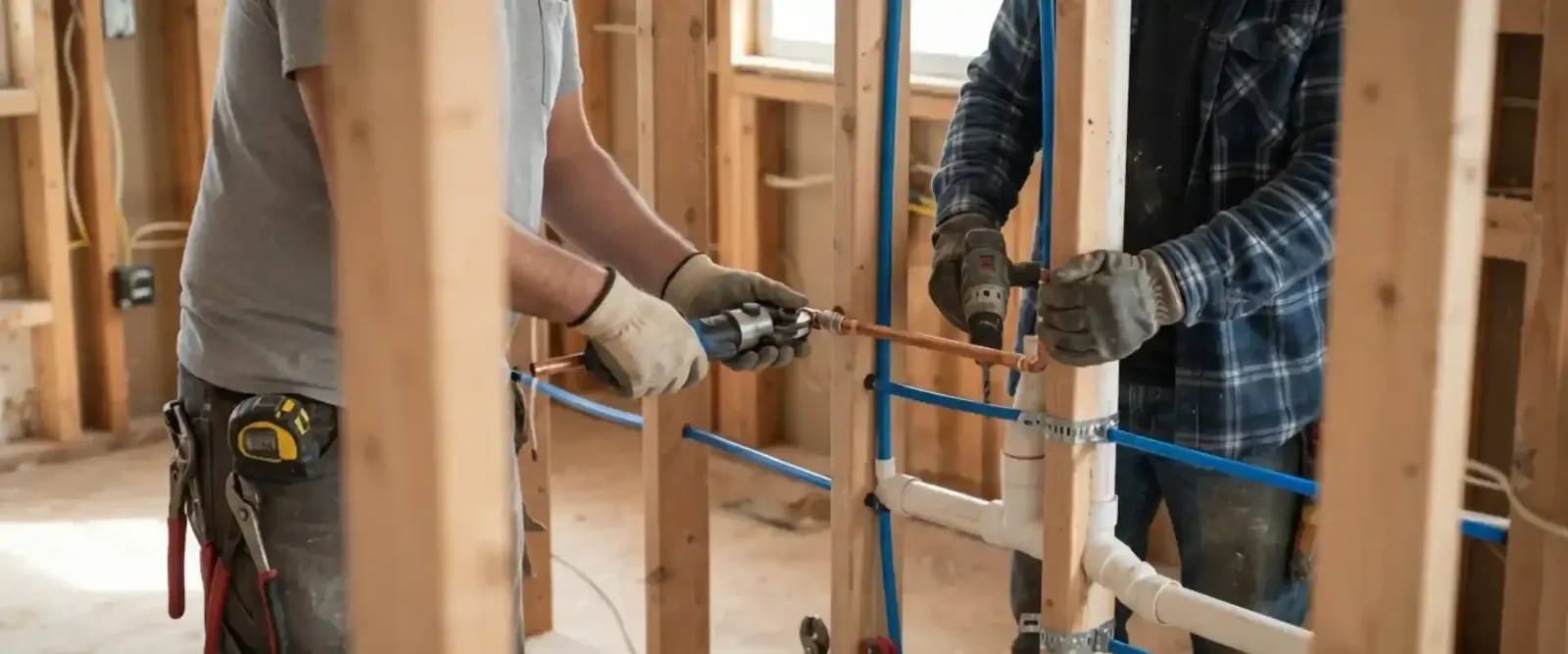
The order of work, from rough-in to water test
- 01Confirm the drain location
Find the existing tub or shower drain and measure from two walls. A pan with a center drain needs the line within an inch or so of its final spot, so check before you buy the pan.
- 02Rough in the trap and line
A shower needs its own trap, usually two inches, set below the pan and vented so it cannot siphon dry. The line slopes toward the main drain at a steady fall, and it must be supported, not left to sag.
- 03Set the pan and connect the drain body
A prefab pan sits on a mortar or foam bed so it cannot flex. The drain body is clamped or glued to the pan, then joined to the trap with the fitting the manufacturer specifies.
- 04Test before you cover anything
Plug the drain, fill the pan to just under the curb and mark the water line. If the mark has not dropped after a few hours, the seal and the drain joint are tight.
What a pan and its drain are made of
A shower pan is the waterproof floor of the stall. It can be a one-piece fiberglass or acrylic base, a molded solid-surface base, or a field-built pan made from a sloped mortar bed and a waterproof liner or membrane. The drain body is the part that ties that floor to your plumbing.
Waste pipe in most homes here is white PVC or black ABS. Cement for PVC and for ABS are different products, and joining the two materials needs a transition fitting made for it. Mixing the wrong glue is one of the quieter mistakes that leads to a slow weep under a finished floor.
Prefab base or built-up pan
A prefab base is faster and has fewer places to fail, since the waterproof surface arrives already formed. A built-up pan allows custom size and tile, but the membrane, the clamping drain ring and the slope all have to be right the first time.
Why the trap and vent matter
The trap holds a plug of water that blocks sewer gas. Without a proper vent, a draining shower can pull that water out of the trap, and the bathroom smells like a sewer. Vent layout is the part most often misjudged on a remodel.
Pan drain not lining up with the trap? Call and describe what you see.
Call (855) 575-2890Which jobs a homeowner can take and which to hand off
Cost and risk both climb once a slab gets cut, so the table sorts the work by what can go wrong.
| Task | Reasonable for a careful DIYer? | Why |
|---|---|---|
| Demolition of the old tub or shower surround | Yes, with care | Watch for hidden supply lines and do not strike the drain pipe. |
| Setting a prefab pan on its bed | Yes | Needs a level base and patience with the mortar or foam. |
| Cutting concrete to move a drain | Better handed off | Slab cutting can hit supply lines and it needs a trench, fall and compaction. |
| Trap, vent and drain line layout | Better handed off | Fall, venting and pipe supports are easy to get slightly wrong. |
| Final leak test and sign-off | Shared | You can run the flood test, but permit rules decide who inspects. |
If your pan drain does not land where the old one was, plan on a plumber for the slab work.
Safety limits and mistakes that cost the most
Shut off the water to the bathroom before demolition and cap the open supply stubs. Wear eye protection when you chip tile and use a respirator when cutting cement board or concrete, since the dust is hazardous to breathe.
The most expensive errors are a flat or backward slope on the drain line, a pan that flexes underfoot and a pinched liner at the drain ring. A leak under a pan rarely shows for weeks, then appears as a stain on the room next door.
When to stop and call
Stop if you find cast-iron drain pipe, if you see water seeping up from the slab, or if the trap arm will not reach the main line at a workable slope. Those cases turn a bathroom upgrade into a drain repair, and a plumber should look before you build anything over it.
Questions to settle before you buy or begin
Write down the size of the room, the drain location and the pan model before you shop. Check the pan maker's installation sheet, since each maker names the drain body, the allowed bed thickness and the curb height. Most returns happen because a drain body does not match the pan.
Decide who is doing what before the first cut. Splitting the work is common: a homeowner handles demolition, a plumber handles the trap and vent, and a tile setter handles the finish. A clear handoff avoids a pan that is set before the plumbing is approved.
Tavares local note: slab floors and permits
Most Tavares homes are built on a concrete slab, so moving a shower drain usually means breaking out concrete and rebuilding the line below. If you are only swapping a pan over the existing drain, the slab stays untouched, which is the cheapest path. Plan the new pan around the old drain location whenever you can.
Permit rules vary, so ask the City of Tavares Building Division at 201 E. Main Street before you cut anything. They can tell you whether a pan swap, a drain move or a full bath remodel needs a permit and inspection. A homeowner who skips that call can be asked to open finished walls later.
Getting the drain right before the finish goes on
A shower drain is part of the home's waste system, so it follows the Florida Building Code, Plumbing. We do not state specific code numbers here because they change, and your inspector or plumber can confirm what applies to your layout.
If you are moving the drain, adding a bath or opening a wall that holds supply lines, our plumbing installation team can rough in the drain, trap and vent and leave it ready for your pan. If the old drain is slow, check it first with drain cleaning so you do not tile over a partial clog.
Neighbors and nearby towns
If you own an older home in Eustis or Mount Dora, check what the existing drain is made of before you start, since cast iron and clay behave differently from PVC. Either way, the checklist is the same: slope, support, vent and a water test.
Frequently asked questions
You can set a prefab pan and connect it to a drain that is already in the right place. Moving the drain means cutting the slab, rebuilding the trap and vent and often pulling a permit, so most people hire a plumber for that part. Ask the City of Tavares Building Division what applies to your remodel.
Many residential shower drains use a two-inch trap and drain line, though your pan maker's instructions and the Florida Building Code, Plumbing decide the final size. Check the pan paperwork before you buy fittings. A plumber can confirm the size once the existing drain is exposed.
Yes, every fixture trap needs air behind it so the water seal is not pulled out. The vent can be its own pipe or tie into a nearby vent, depending on distance and fall. A shower that gurgles or smells after draining usually has a vent problem.
Plug the drain, fill the pan to just below the curb and mark the water level. Leave it for several hours and check whether the mark has moved. A drop means the liner, the drain ring or the connection is leaking and must be fixed before tile.
Cast iron can rust through from the inside and is heavy to cut. If the pipe feels rough, flakes or has an old patch, have it looked at before building over it. Replacing a section while the floor is open is far easier than doing it after the tile is down.
Call when the drain has to move, when you find water in the slab, or when the trap arm cannot reach the main line at a steady slope. Also call if you smell sewer gas after the first test. A plumber can finish the rough-in and hand the room back to you for the pan.
Talk through your shower drain plan with a licensed plumber before the concrete is cut.
Call (855) 575-2890Sources and standards
Where this page cites a local fact, it comes from a public City of Tavares page, another city's own web page or a published water quality report. Where a figure is not published, the page says so instead of guessing.
Plumbing work in Florida is governed by the Florida Building Code, Plumbing, which is the standard inspectors apply, and permit rules vary by city. The contact page explains how to reach us, and any plumber's license can be checked with the Verify a License tool at MyFloridaLicense.com.