What a leak sensor does and does not do
A basic sensor has two metal probes on its base. When water bridges them, a circuit closes and a siren sounds. Smart versions add Wi-Fi and push an alert to your phone, which matters when you are away.
A sensor only detects water at its own spot. It cannot see inside a wall or under a slab. If a pressurized line is leaking in a place with no sensor, the first sign may be a high bill, not an alarm.
Sensor types compared
Pick by what you want to protect, not by the longest feature list. Batteries also matter, because a dead sensor is worse than none when you trust it.
| Type | Best use | Main limit |
|---|---|---|
| Battery alarm only | Under a sink or behind a toilet | Useless if no one is home to hear it |
| Wi-Fi sensor with app alert | Water heater, laundry, travel | Needs working Wi-Fi and power |
| Sensor plus automatic shutoff valve | Main line or appliance supply | Costs more and needs proper installation |
| Flow monitor on the main | Whole-house leak and usage tracking | Usually installed by a plumber |
A shutoff valve can stop the damage, but only if the valve is installed correctly.
Sensor going off and you cannot see the leak? Call and we will track it down.
Call (855) 575-2890Seven places to put a sensor first
Start where leaks most often begin, then expand. Put one on the floor, flat, within a few inches of the likely drip point.
- Next to the water heater, or inside its drain pan
- Under the kitchen sink near the supply lines
- Behind the dishwasher, if you can reach the floor there
- Beside the washing machine hoses
- Behind each toilet, near the supply line
- Under the refrigerator ice maker line
- Near the air handler drain pan, where condensate can overflow
Test each sensor monthly by touching the probes with a damp finger. Replace batteries on the schedule printed on the box. Dust the sensor when you clean the floor, since a film of grime can slow its response.
Tavares local note: lakes, rain and slab floors
Tavares sits on an isthmus between Lake Eustis and Lake Dora, and lots near the lakes can have a high water table. After heavy rain, ground moisture and overloaded drains are real possibilities. A sensor near the garage door and by the air handler can warn you whether water is coming from outside or from a pipe.
Because most Tavares houses are on slab, a pressurized leak under the floor cannot be seen. Check your water meter. Shut every fixture off, then watch the leak indicator or the dial. If it keeps moving, you have a leak somewhere past the meter. The City of Tavares maintains more than 134 miles of water lines, and it lists emergency numbers on its Water Division page if the problem is on the street side.
Installing a sensor yourself
Most sensors need no tools. Peel the backing, press the sensor to a clean, dry floor, and pair it with your phone if it is a smart model. Wipe the floor first, because dust can stop the adhesive from holding.
Placement matters more than price. A sensor set on a shelf or a counter will never get wet, so lay it flat on the floor at the low point where water would pool.
Smart shutoff valves are different. They cut into a water line, need correct sizing, and should be set in a spot that is easy to reach. If you are not comfortable with fittings, use a licensed plumber so a bad joint does not create the leak you were trying to prevent.
When to call a plumber after an alert
If a sensor goes off and the puddle is from an obvious spill, dry it and reset. If the area stays damp, if the sensor trips again within a day, or if you see a stain growing on a wall, treat it as a leak. Close the nearest shutoff valve and call. Do not wait to see if it dries, because a seep behind a wall keeps feeding mold.
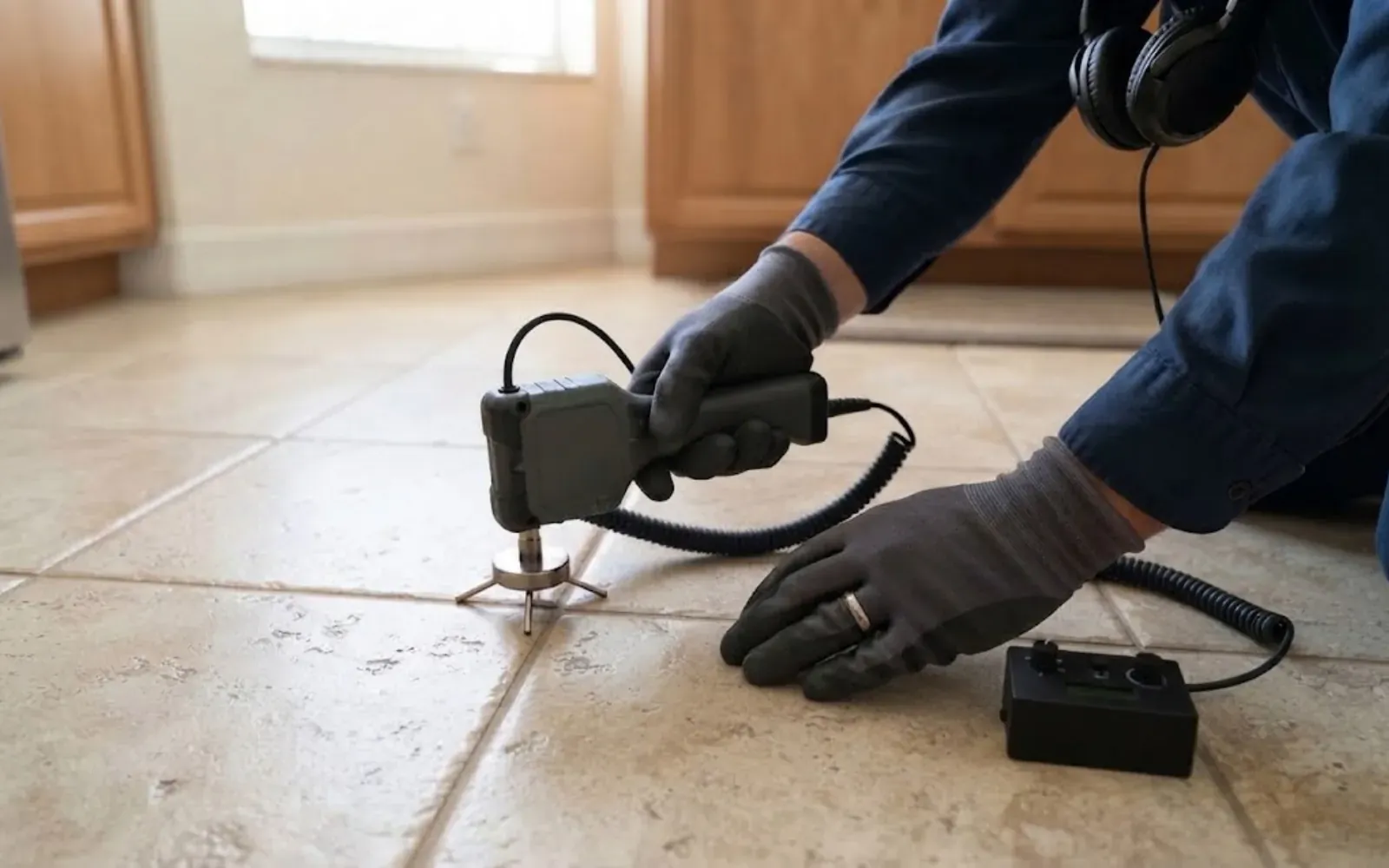
For leaks you cannot see, a plumber uses acoustic listening gear, pressure testing and thermal imaging to find the spot before opening any floor. Our leak detection service works that way, and we answer the same calls from Umatilla and Eustis. If a test confirms water is escaping below the floor, our slab leak repair page explains the options.
Insurance and records
Many insurers look more kindly on homes with automatic shutoff devices, though discounts vary, so ask your agent. After any leak, photograph the damage before drying and keep your sensor alert as a time stamp.
Write down the date you noticed the water, the spot, and what you shut off. A short, dated record, plus a few phone photos of the wet spot and the sensor, makes a claim conversation much easier and helps a plumber trace where the water started.
Frequently asked questions
No. A sensor only reacts to water that reaches its probes. A slab leak can run below the floor for weeks. A rising water bill, a hot spot on the floor or a meter that moves with everything off are the real signs. A plumber then pinpoints it with listening gear.
Start with the water heater, kitchen sink, dishwasher, washing machine and each toilet. That is around five to eight sensors for most houses. Add one near the air handler pan and the garage door if your lot floods in heavy rain.
If you travel or rent out part of the house, yes, because the alert reaches your phone. If someone is usually home, a loud battery alarm is cheaper and works without Wi-Fi. Both need regular battery checks.
Only if it is paired with an automatic shutoff valve. Sensors alone just sound an alarm or send a message. A valve on the main line or on an appliance supply can stop the flow, and it should be installed to be reachable.
Look in the ground box near the street or the front of your lot. Open the lid carefully, check for insects, and find the leak indicator or small dial. With all water off, any movement means water is flowing somewhere past the meter.
Not always. A one-time trip from a spilled mop bucket is harmless. If the same spot trips again, or the floor stays wet without a clear cause, call. Repeated alerts usually mean a slow seep from a fitting or a supply line.
Hidden leaks are our job, day or night, with a clear price before work starts.
Call (855) 575-2890Sources and standards
Where this page cites a local fact, it comes from a public City of Tavares page, another city's own web page or a published water quality report. Where a figure is not published, the page says so instead of guessing.
Plumbing work in Florida is governed by the Florida Building Code, Plumbing, which is the standard inspectors apply, and permit rules vary by city. The contact page explains how to reach us, and any plumber's license can be checked with the Verify a License tool at MyFloridaLicense.com.