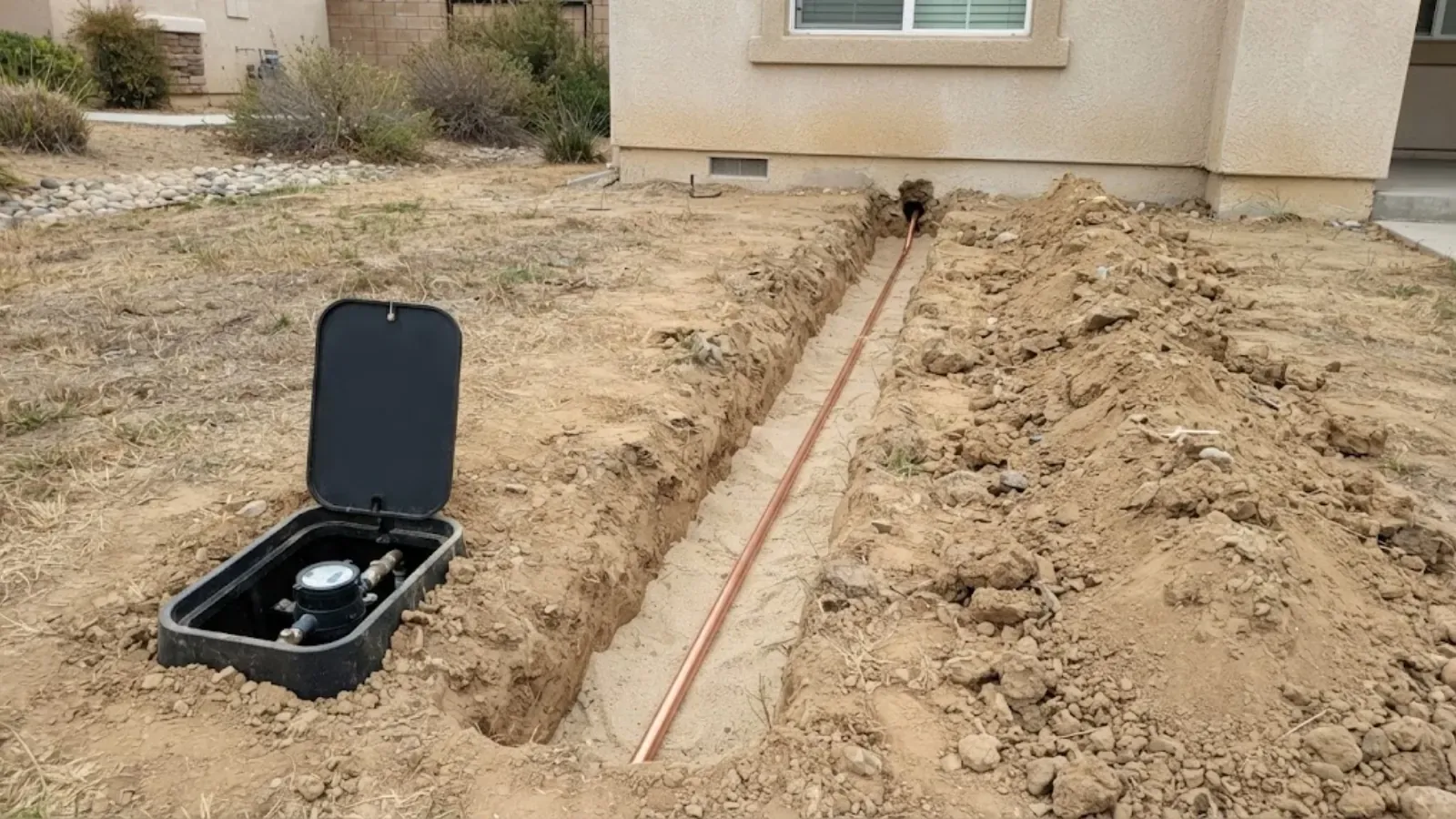
Whose line is it? House side and City side
The meter is the usual dividing line, though ownership can vary, so confirm with the City if it matters.
| Where the water shows | Usually whose line | What to do first |
|---|---|---|
| Between the street and the meter | The utility | Call the City of Tavares water line listed on its Water Division page |
| Meter box full of water | Could be either side | Photograph it and call us or the City to confirm |
| Between the meter and the house | Yours | Close your house valve and call us |
| Inside the house | Yours | Close the main valve and see our leak or burst pipe help |
| Low pressure on the whole street | The utility | Ask neighbors, then call the City |
If you are not sure which side the break is on, call us. We will help you sort it out before any digging.
What to do while you wait for a plumber
Four quick steps help whether the leak is on your side or the City's.
Turn it clockwise. If the meter stops moving, the leak is past that valve.
Write down the reading and the time. Check it again after 30 minutes with no water in use.
Soft ground over a buried line can collapse, and standing water can hide electrical risks.
Digging without marking lines can hit gas, power or fiber. Call Sunshine 811 first if digging is ever needed.
Water bubbling up in the yard? Shut the valve and call now.
Call (855) 575-2890How a water line fails and how we find the leak
The service line is usually copper, polyethylene, PVC or older galvanized pipe. Each fails differently. Copper pits, polyethylene cracks at fittings, and galvanized steel rusts shut from the inside until it leaks at a joint.
We confirm a leak with the meter test, then pressure test the line. A line locator traces its path, and listening gear on the ground pinpoints the break. In some soils plastic pipe is quiet, so we use the locator and tracer gas where listening fails.
Low water pressure: four causes
Weak pressure is not always a leak. These are the usual reasons, in the order we check them.
A partly closed valve
The meter valve or house shutoff may have been bumped partly closed. A gate valve that is old can also fail to open fully. This is the quickest check.
A failing pressure regulator
Many homes have a pressure regulator near the main shutoff. A worn one can let pressure drop too low, or climb high enough to stress fittings. A gauge on a hose bib shows the reading. Most homes sit best between roughly 40 and 80 psi.
A leak or restriction in the line
A leak bleeds pressure before it reaches the house. Old galvanized pipe also narrows from rust and scale, and low pressure from this type of pipe is a sign to talk about repiping.
A problem on the utility side
If pressure drops across the street, hydrant flushing or a main repair may be the reason. Ask a neighbor and call the City.
Repair choices: dig or go trenchless
A spot repair means digging down to the leak, cutting out the bad section and joining new pipe with proper fittings. It is quick when the break is shallow and the yard is open. The ground is then backfilled and compacted.
Trenchless replacement pulls a new line through the old route from two small pits, which protects driveways, walls and mature trees. It needs a path that is clear enough to pull through, and it costs more to set up. We explain which suits your yard.
What a water line repair costs
The price is set once we know where the break is and what is above it. Five factors move it most.
A shallow spot repair is small. A long run to a far-back house is larger.
Grass is easy. Driveways, sidewalks, roots and fences add work.
Copper, polyethylene and PVC each need their own parts and methods.
Trenchless uses more equipment but disturbs less of the yard.
Nights and weekends can change the dispatch cost, and you hear it first.
Homeowners policies often exclude the cost to repair the line itself, and some cover resulting damage. Some carriers sell service line coverage. Ask before work, and keep photos and meter readings.
Want your real number? Describe the job to a dispatcher and the price is explained before work starts.
Water lines around Tavares
The City of Tavares draws groundwater from six wells and runs four water plants, and it maintains about 134 miles of water lines. Your service line is the short, private piece at the end of that system. A leak here costs you money, not the City.
We serve homes in Leesburg and Umatilla too. For a leak inside the house, see burst pipe repair.
Frequently asked questions
Yes. Our dispatch line is open 24/7. Close the house shutoff, note the meter reading and call. A licensed plumber is sent as quickly as the schedule allows, and the price is explained first. Same-day appointments are offered when available.
Common signs include a wet strip in the yard, a meter that moves with the house valve closed, weaker pressure and higher bills. Run the meter test, and if it moves with the house valve shut, the buried line is the likely cause.
Generally yes. The utility maintains the line to the meter, and you maintain the pipe from the meter to the house. Rules can vary, so confirm with the City of Tavares if it is unclear.
A partly closed valve, a failing regulator, a leak or a clog in old pipe are the usual causes. If the whole street is affected, it may be a City issue. Test the valves first, then call.
Yes, before any digging. Sunshine 811 has buried utilities marked so a shovel or machine does not hit them. Your plumber will normally handle the call, and you should confirm before any digging starts.
A shallow spot repair can be done in a few hours when access is simple. Longer runs, concrete and trenchless work take longer. We give you a realistic idea once the break is located.
A buried line leaks 24 hours a day, so please call before it undermines the yard.
Call (855) 575-2890Sources and standards
Where this page cites a local fact, it comes from a public City of Tavares page, another city's own web page or a published water quality report. Where a figure is not published, the page says so instead of guessing.
Plumbing work in Florida is governed by the Florida Building Code, Plumbing, which is the standard inspectors apply, and permit rules vary by city. The contact page explains how to reach us, and any plumber's license can be checked with the Verify a License tool at MyFloridaLicense.com.