Do you need heat tape in Florida at all
Usually not. A typical Tavares home keeps its supply pipes inside the slab, in interior walls or in the attic, where temperatures usually stay above freezing, though attic lines can still be at risk in a long hard freeze. The pipes at risk are the ones outdoors or in unheated spaces.
A pipe freezes when the air around it stays below 32 degrees for several hours and the water inside is not moving. A brief dip to freezing at dawn rarely does damage, but a long hard freeze does. Plan for the exposed pipes, not the whole house.
Which pipes are worth protecting
Most pipe in a slab home is safe, so the table focuses on the places a cold night can actually reach.
| Where the pipe is | Risk in a hard freeze | Best protection |
|---|---|---|
| Hose bibs and outdoor spigots | High | Foam cover, disconnect hoses |
| Irrigation backflow assembly | High | Insulated bag or cover, shut off supply |
| Pool equipment lines above ground | High | Run the pump, insulate, drain if possible |
| Pipes in a garage or open carport | Moderate | Foam sleeve, heat tape on the longest runs |
| Attic water lines | Low to moderate | Insulation over the pipe, open attic doors to the cabinet below |
Heat tape is meant for the high and moderate rows, not for pipe inside walls.
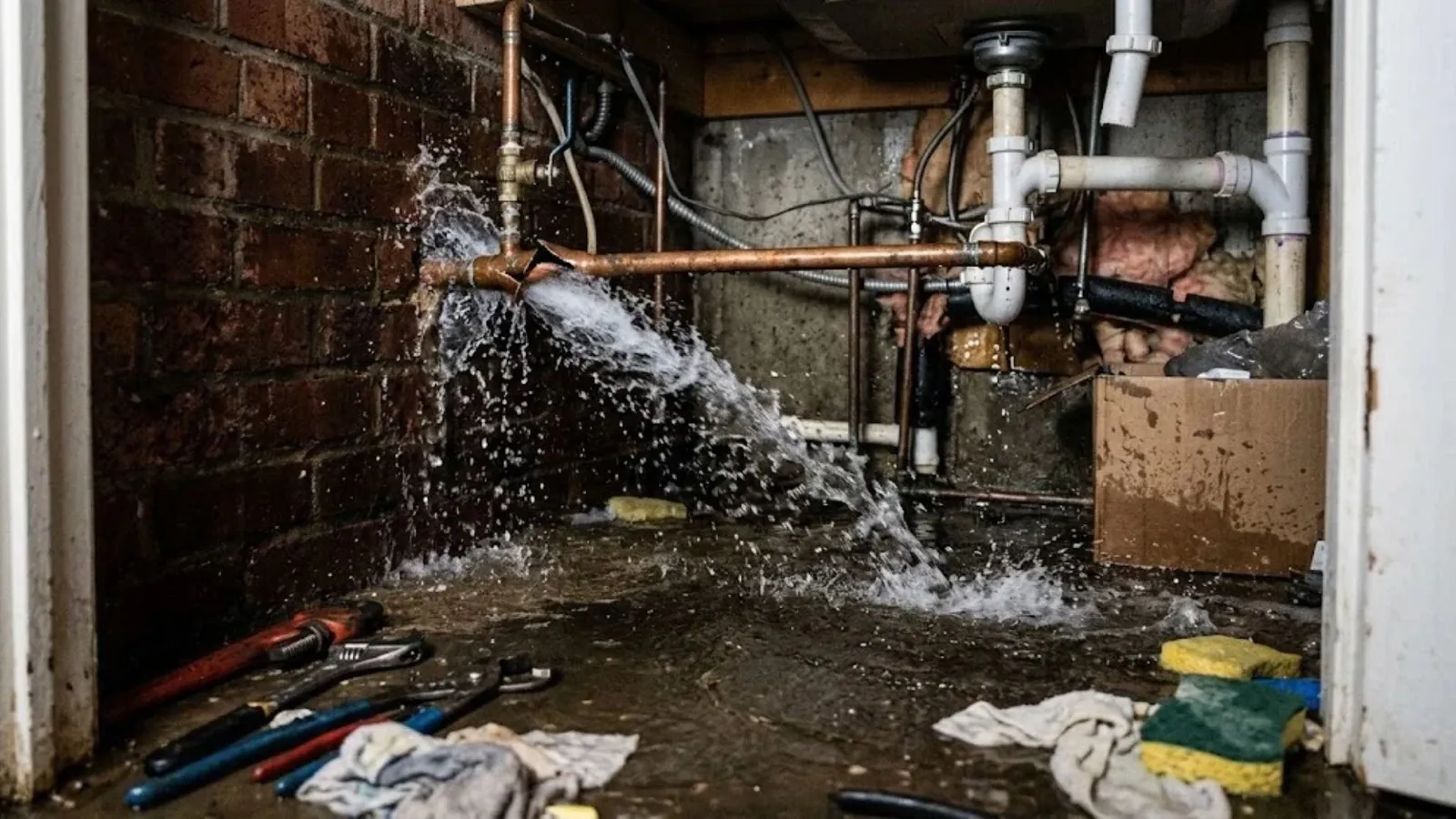
Pipe split after a cold night? Shut the main valve and call.
Call (855) 575-2890How heat tape works and the two kinds
Heat tape runs on household current and warms the pipe it touches. A constant-wattage cable produces the same heat along its length. A self-regulating cable gives more heat where the pipe is colder and less where it is already warm, which makes it safer and more efficient.
Plug-in kits for exposed spigots and short runs are common at hardware stores. Match the kit to your pipe material, since some plastic pipe has temperature limits, and read the label before you buy.
Installing heat tape without creating a hazard
- 01Choose the right product
Pick a cable rated for the pipe length and material. Self-regulating is the better choice, and the package should show an approval mark from a recognized testing lab.
- 02Wrap the pipe as directed
Run it straight along the pipe or spiral it as the maker says. Never overlap a constant-wattage cable on itself, because overlapping can overheat and start a fire.
- 03Cover with pipe insulation
Wrap foam or fiberglass insulation over the tape so heat stays at the pipe. Keep insulation off the plug and the thermostat end.
- 04Plug into a protected outlet
Use a GFCI outlet, check the cable each year for cracks and unplug it when the cold season ends. Do not use extension cords that are not rated for the load.
When to avoid heat tape
Skip it on pipes inside insulated walls, near stored paper or paint, or on a cable that looks scorched or frayed. Replace damaged tape instead of repairing it, and never cut a plug-in cable to length unless the maker says you can.
If a pipe freezes or splits anyway
Shut off the main valve, open the faucet the pipe feeds, and warm the pipe slowly with a hair dryer on low or warm towels. Do not use an open flame. Keep the faucet open so pressure can bleed off as the ice melts.
If the pipe has split, you may see water only after it thaws, so check the area when temperatures rise. A cracked line needs a repair, and a pipe that froze once is more likely to freeze again, which is worth fixing at the source.
A few habits that keep exposed pipes safe
Before a forecast freeze, disconnect garden hoses, since a hose left attached traps water in the spigot. Cover spigots with foam domes, and open the cabinet doors under sinks on outside walls so house warmth reaches the pipes. Know where your main shutoff is before you need it.
If you leave town during cold weather, keep the heat on at a moderate setting and ask someone to check the house. A split pipe in an empty house can run for days.
Tavares local note: freezes are rare but real
Central Florida does get occasional hard freezes. The Great Freeze of 1894 to 1895 and another in 1898 to 1899 hit nearby Eustis and devastated the citrus economy. That history is a good reminder that rare does not mean never, so protect the few pipes that sit outside.
The City of Tavares Water Division requires backflow preventers to be tested every year, and many of those assemblies sit above ground beside a house or yard. Those are the pipes to cover on a freeze night. Ask the Water Division about your assembly before you handle it.
Where to get help
If an exposed line keeps freezing, we can reroute or insulate it with proper water line repair work, or reset a split section after a freeze. For a wider upgrade of old, vulnerable pipe, repiping is the permanent fix.
The same advice applies if you live in Umatilla or Leesburg, since a cold night reaches all of Lake County and only the exposed pipes are at risk.
Frequently asked questions
Most do not. Pipes inside the slab, interior walls and the conditioned part of the house stay warm enough. Heat tape is worth using on exposed spigots, a garage run or an irrigation assembly if a hard freeze is forecast and the pipe cannot be drained or covered.
Pipes can freeze when air stays at or below 32 degrees for several hours. A short dip at dawn is rarely enough, but a long cold night with wind is. Watch the forecast for lows in the upper 20s and prepare exposed pipes before dark.
Self-regulating tape with an approval mark is made for that kind of use, but check it each year for cracks and scorch marks. Constant-wattage cable should be used with a thermostat. Unplug any tape when cold season ends.
For most Florida nights, yes. Foam sleeves and covers slow heat loss enough to carry a pipe through a short freeze. Add tape only on a long run that sits fully outside, and always insulate over it.
A slow drip keeps water moving, which helps prevent ice in a pipe on the outside wall of a house. Use the faucet farthest from where water enters. It costs some water, so use it only on nights that are forecast to stay below freezing.
Close the main valve, open the nearest faucet, and thaw the pipe slowly with a hair dryer or warm towels. Never use a flame or torch. If water appears from a split once it thaws, keep the main closed and call a plumber.
If a freeze got ahead of you, we repair split lines day or night.
Call (855) 575-2890Sources and standards
Where this page cites a local fact, it comes from a public City of Tavares page, another city's own web page or a published water quality report. Where a figure is not published, the page says so instead of guessing.
Plumbing work in Florida is governed by the Florida Building Code, Plumbing, which is the standard inspectors apply, and permit rules vary by city. The contact page explains how to reach us, and any plumber's license can be checked with the Verify a License tool at MyFloridaLicense.com.